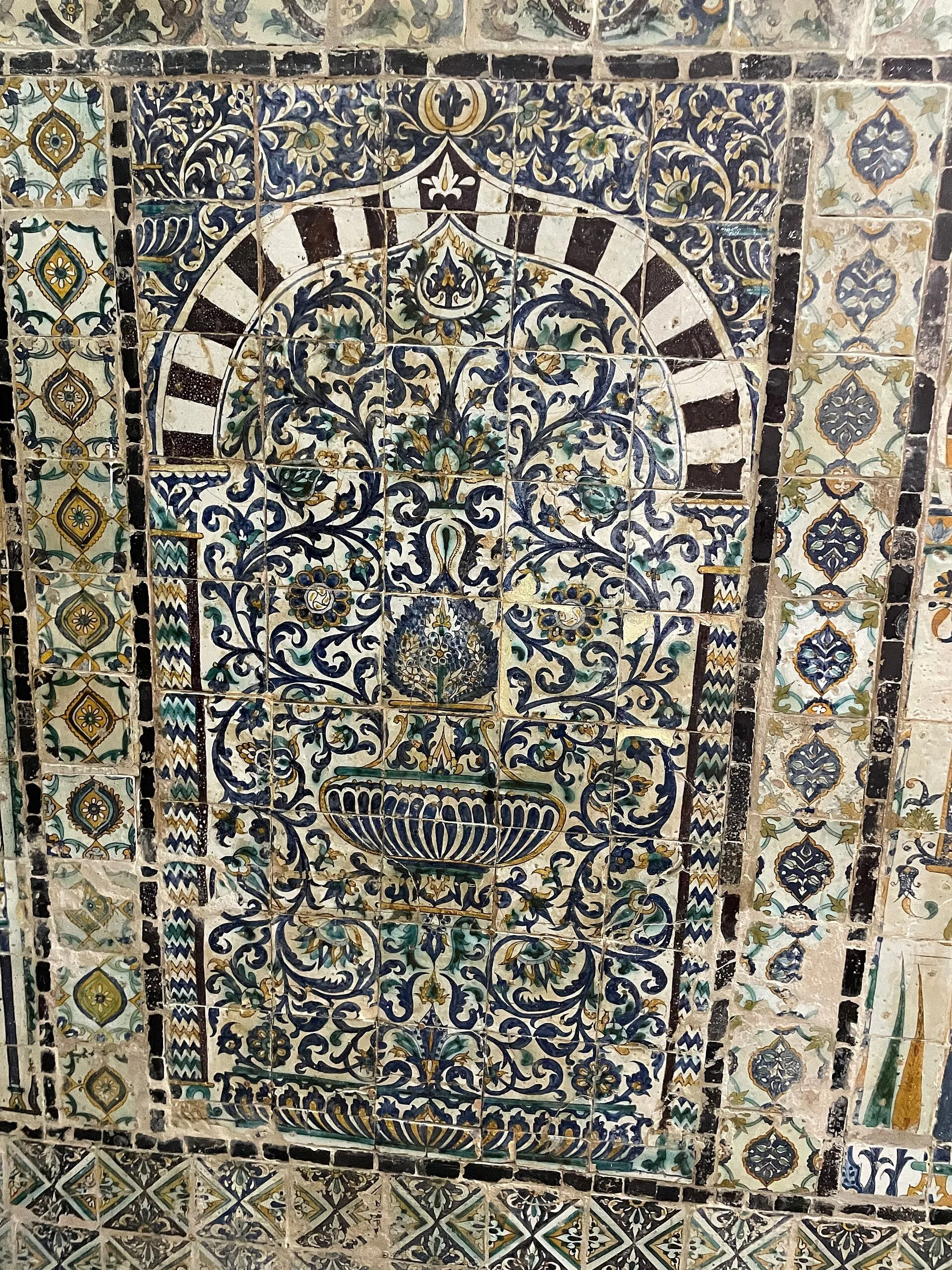
Tile panel
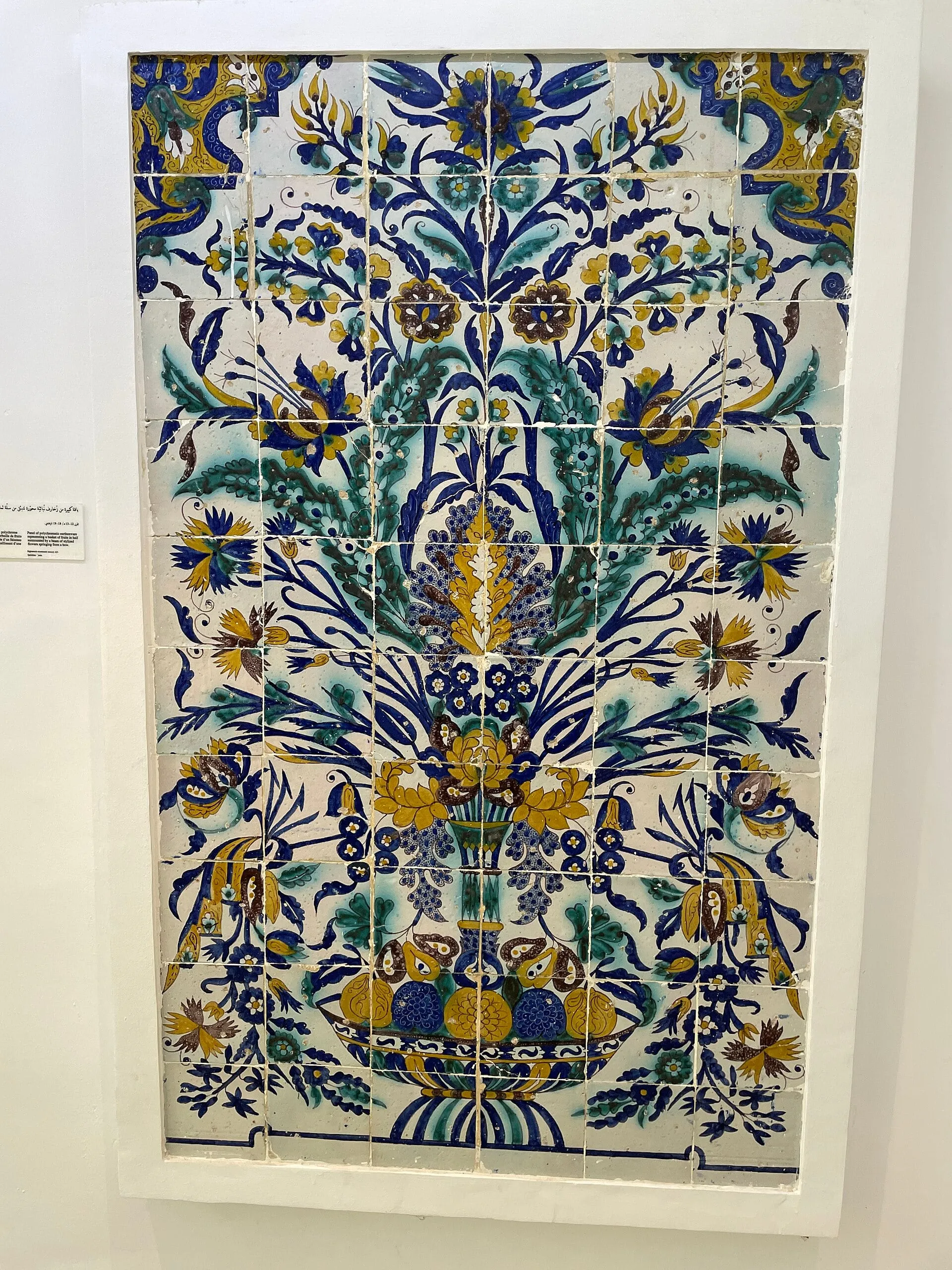
Digital museum of Tunisian ceramics
From the workshops of Tunis emerged a distinctive ceramic art.
Painted tiles, monumental panels and everyday vessels brought colour to palaces, mosques and homes. Their makers drew on artistic exchanges across the Mediterranean, developing a visual language of their own. Their works travelled far beyond their birthplace. Qallaline Archives brings their history, craftsmanship and circulation together, so that their beauty can be appreciated and their provenance remembered.
A first selection of works, each one sourced and credited, with its level of attribution.
Tile panel
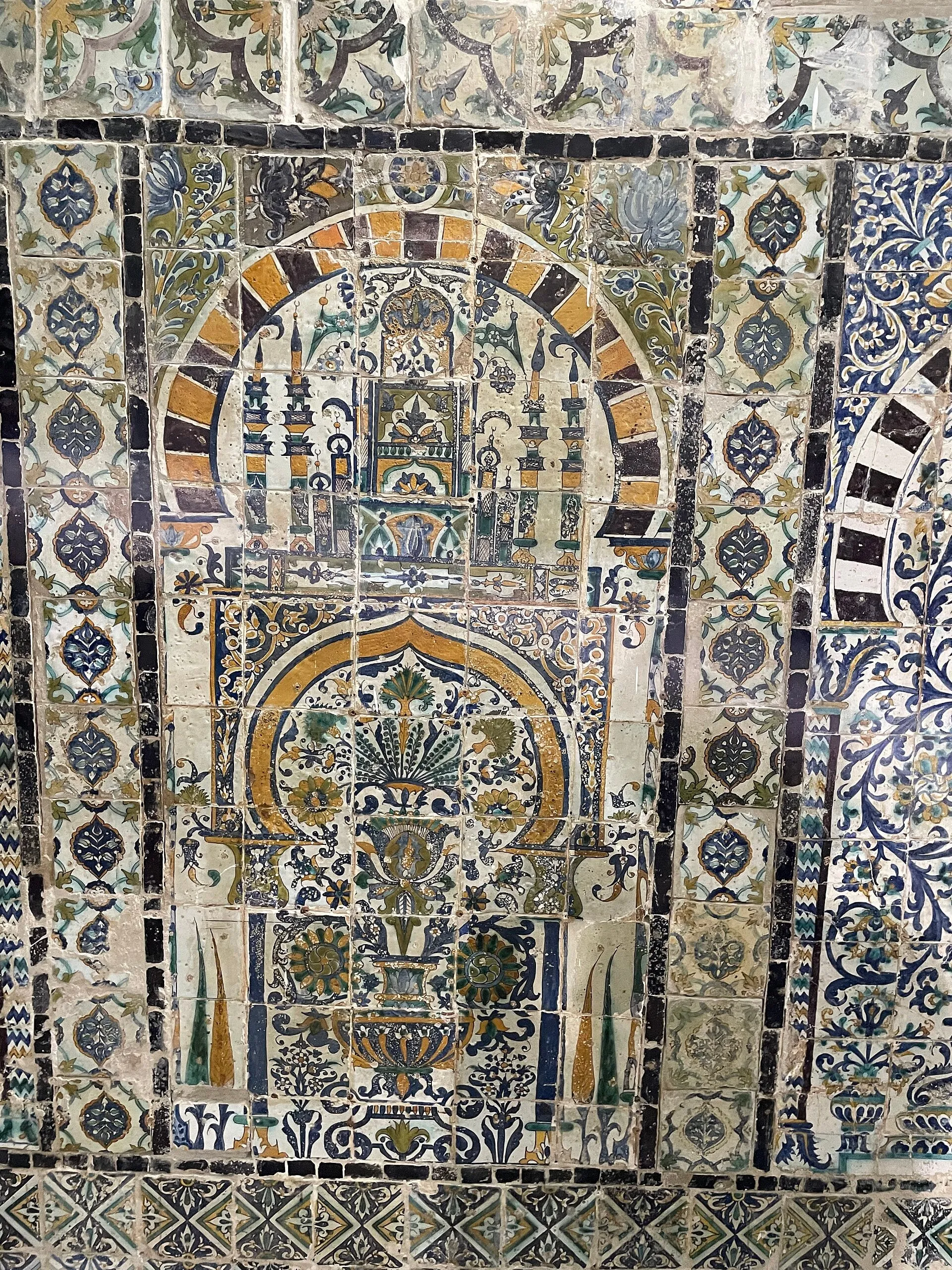
Tile panel
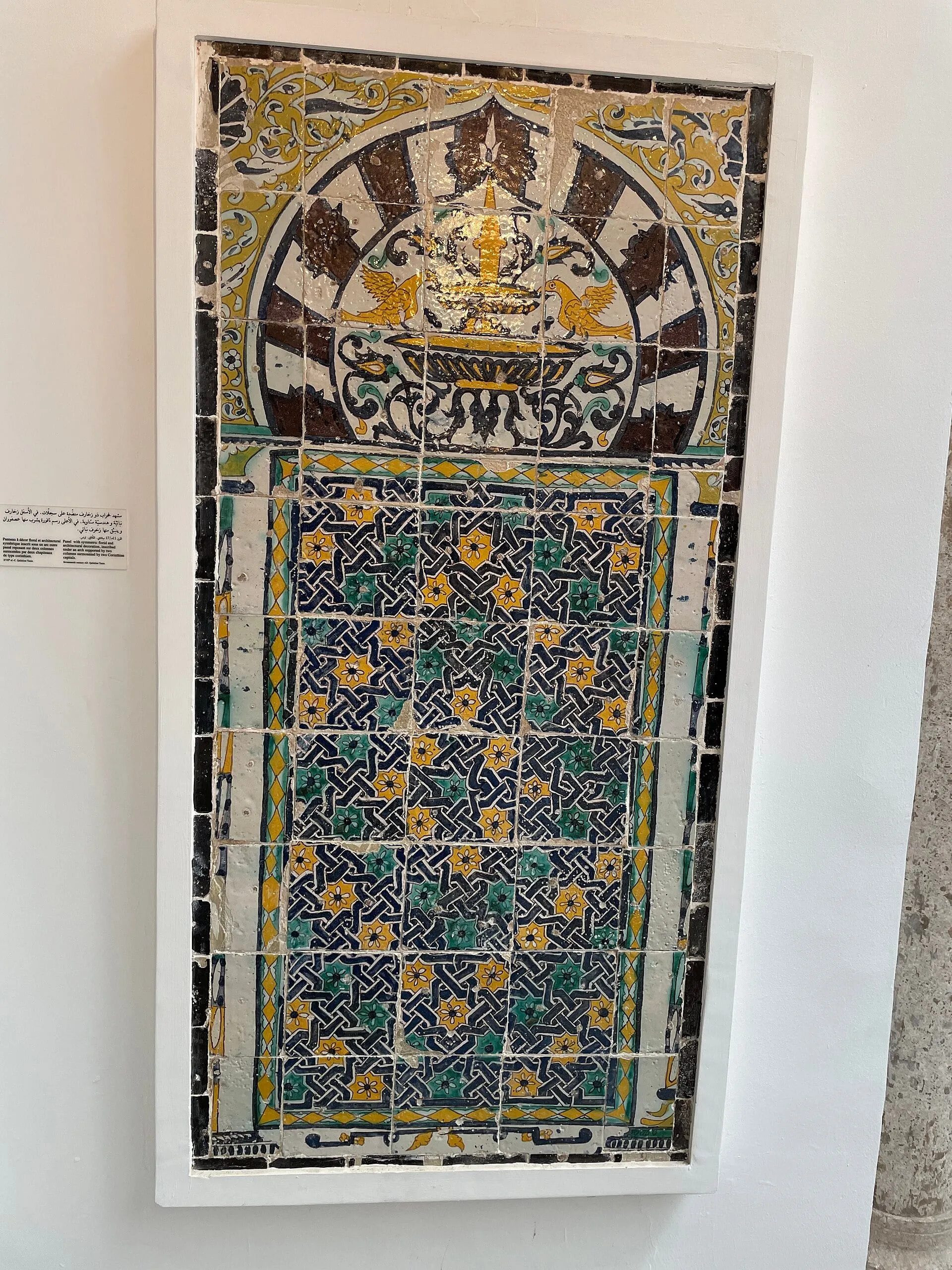
Tile panel
17th century (museum label)
Heritage and recognition
The UNESCO nomination 02280, submitted by Algeria, concerns architectural ornamentation in zellidje and glazed ceramics, together with associated knowledge and skills. Qallaline Archives raises concerns about the representation of historic ceramics and the visibility of Tunisian workshops in that nomination. Our documentary review identifies historical imports, technical distinctions and a signed Chemla panel shown in the nomination film.
The risk we identify is that incomplete attribution could become embedded in an internationally circulated account of heritage. Accurate provenance and clear descriptions of living practices are essential. This does not dispute the value of Algerian monuments or contemporary craftsmanship. Inscription under the 2003 Convention does not confer exclusive ownership.